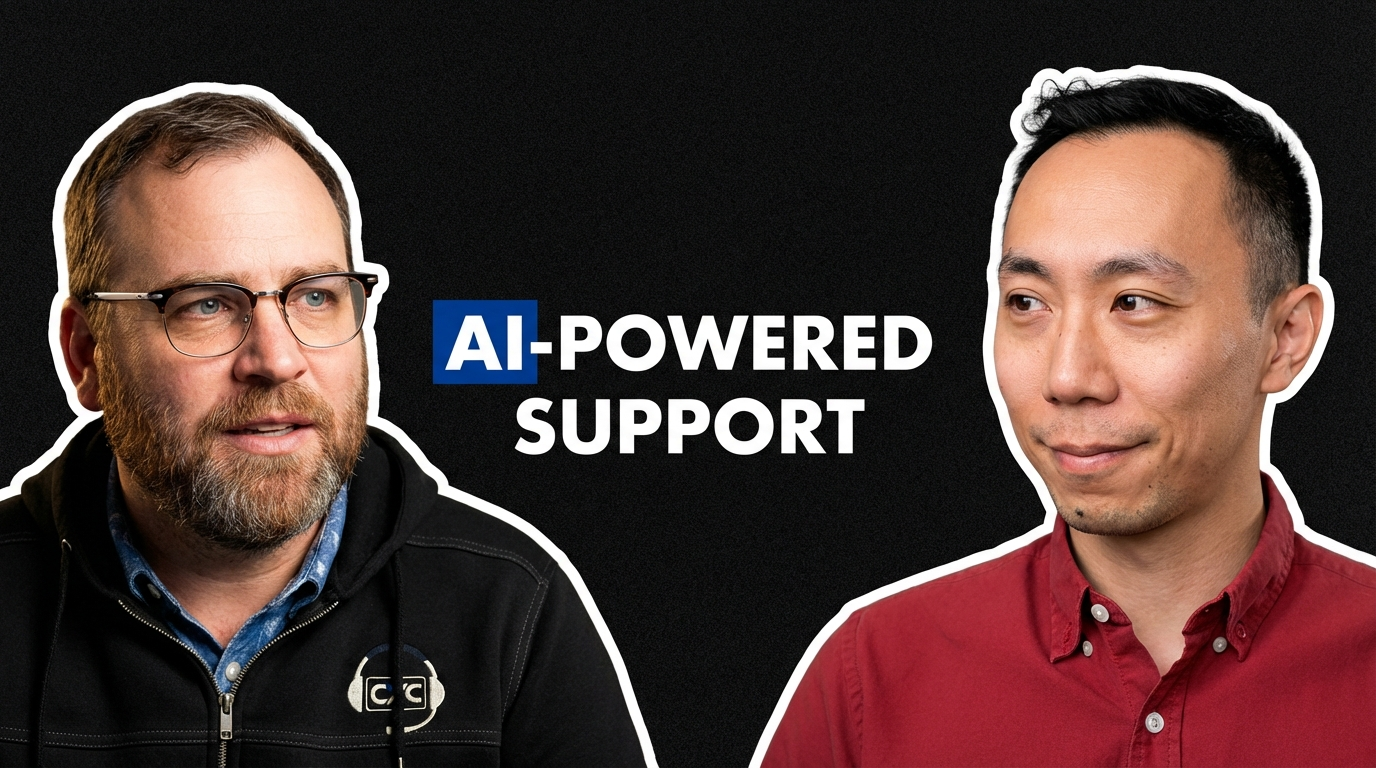
In today’s rapidly evolving support landscape, the integration of AI isn’t just a trend. It’s a necessity. Yet, behind every successful AI-powered company lies a foundational element often overlooked: the team. In this post, we have deep dived into CXChronicles discussion with CEO, Ryan, from Assembled. we’ll explore Ryan Wang’s journey from machine learning engineer to CEO of Assembled, and what his experiences reveal about building a winning support team in the age of AI. Whether you’re a founder, a support leader, or an aspiring entrepreneur, understanding how to blend technology, culture, and customer feedback will be key to your future success.

The Power of Deep Experience: From Machine Learning to Support Innovation
Ryan Wang’s background on the machine learning frontier and his early days at Stripe provide a critical insight: real-world experience at high-growth companies teaches lessons that can’t be learned in a classroom or a siloed environment. Ryan’s stint at Stripe, where customer support was handled by the founders themselves, exemplifies the importance of empathy, hands-on involvement, and operational understanding.
This experience seeded Ryan’s passion for support rotation – hands-on, frontline engagement that exposes teams to actual customer pain points. It’s clear from his story that understanding support at every level fuels innovation. When AI and support intersect, this grounding in customer reality becomes even more vital, guiding the development of tools that genuinely solve user problems.
Key takeaway: Deep operational experience and direct user engagement are invaluable when building AI-driven support teams. They ensure technology solves real needs, not just abstract problems.

Building a Versatile, Skilled Team for AI-Powered Support
One of Ryan’s most compelling points is how the early days at Assembled required wearing multiple hats – sales, engineering, support, and product were all intertwined. This flexibility fostered a culture of creativity and broad skill sets, which Ryan emphasizes as essential in the AI era.
Today, the team at Assembled is a reflection of this philosophy. Ryan notes that more than half of their support team writes production code, an extraordinary level of technical fluency. They seek candidates who are adaptable, curious, and willing to learn new skills quickly, like SQL, API integration, or AI tool usage.
This broader skill set is driven not only by necessity but by the understanding that AI support solutions require cross-disciplinary talent. The best teams blend deep technical ability with customer empathy and a willingness to experiment.
Key takeaway: Future-proof support teams are diverse in skills and backgrounds, capable of wearing multiple hats: technical, creative, and customer-focused. Agility and curiosity are critical.
The Role of Content and Documentation: Fueling AI with Knowledge
Ryan emphasizes that good documentation, playbooks, and knowledge bases are not just operational tools. They’re strategic assets for AI deployment. Clear, organized support content accelerates AI onboarding, improves accuracy, and shortens deployment timelines from months to days.
He advocates for recording meetings and thoughtful note-taking as practices that build “living playbooks.” These repositories of tribal knowledge enable AI systems to learn and adapt faster. They also reduce reliance on individual memory, making support scalable and consistent.
Key takeaway: Strategic documentation and capturing institutional knowledge are foundational to effective AI support. They serve as fuel that accelerates AI learning and performance.
Feedback Loops: Creating a Continuous Improvement Cycle
Ryan’s approach to feedback is straightforward but powerful: ask for it often, act on it immediately, and close the loop. His team leverages tools like feedback boards and surveys, and he stresses the importance of visibly acting on feedback to encourage more.
This continuous improvement loop ensures support remains aligned with customer needs. Ryan also highlights the importance of internal feedback, such as employee surveys, to sustain a strong, motivated team.
Key takeaway: Effective feedback mechanisms, coupled with rapid action, create a virtuous cycle that drives ongoing support excellence and team engagement.
Leveraging Existing Tools Over Building In-House
A recurring theme in Ryan’s insights is “doing less in-house.” Instead of reinventing the wheel, Assembled leverages established tools like Salesforce, HubSpot, and standard communication platforms. Their focus is on deploying AI into well-organized, documented support ecosystems that already work.
Ryan offers a simple but profound rule: Invest your “innovation chips” where they matter most, deep AI integration, processes, and workflows, rather than wasting effort on reinventing basic tools. This approach accelerates deployment, reduces complexity, and keeps the team focused on strategic differentiation.
Key takeaway: The smartest founders and support leaders prioritize integrating proven tools and focus their innovation on areas that unlock maximum value.
The Future of Process and Content: Knowledge as a Living System
Ryan anticipates a future where support content and processes evolve into dynamic, AI-fed entities. Documented SOPs, FAQs, and transcripts are no longer static. They become living systems that AI can continuously analyze, learn from, and improve.
He advocates for recording discussions, meetings, and support interactions to build a repository of organizational knowledge. Over time, this fuels smarter, more autonomous support workflows, reducing manual effort and increasing consistency.
Key takeaway: Support processes and content should be treated as evolving entities – dynamic, AI-fed, and continuously optimized for better outcomes.
See some of CXChronicles knowledge base articles to get a general idea of what that could look like.
Closing the Feedback Loop Internally and Externally
Finally, Ryan underscores the importance of closing the feedback loop both with customers and team members. Validating that feedback has driven change builds trust, morale, and continual improvement.
He shares how even simple acts like updating support workflows or office space based on employee feedback can have a profound impact on culture and effectiveness.
Key takeaway: Transparent communication about changes rooted in feedback enhances trust and maintains a cycle of continuous growth.
Final Thoughts
Ryan Wang’s insights reveal that building a successful, AI-enabled support organization isn’t just about technology, it’s fundamentally about people, processes, and a relentless focus on iteration. Cultivating a team with diverse skills, documenting organizational knowledge meticulously, and actively closing feedback loops create a foundation for support that scales and evolves with AI.
As AI continues to permeate customer support, the companies that succeed will be those that combine technological innovation with a culture of learning, adaptability, and customer-centricity.
Next Step: Reflect on your support operations—are you investing enough in your team’s skills, your knowledge systems, and your feedback processes? Now’s the time to build a support powerhouse that leverages AI to truly serve your customers and empower your team.
Want to see these ideas in action?
Check out Ryan Wang and Assembled’s latest innovations at assembled.com or follow their updates on LinkedIn for the future of work and AI-driven support.
Frequently Asked Questions
How does deep operational experience influence AI support strategies?
Operational experience grounds AI solutions in real customer needs and everyday workflows, ensuring tools address actual pain points rather than hypothetical problems.
Why is documentation vital for AI deployment in support?
Clear, organized content acts as fuel for AI systems—speeding up deployment, improving accuracy, and enabling AI to learn from organizations’ real support knowledge.
What skills should support teams develop for the AI era?
Teams should cultivate cross-disciplinary skills like SQL, API integration, coding, and creative problem-solving—flexible abilities that support AI-driven workflows.
How can companies leverage feedback effectively?
By actively asking for feedback, acting on it promptly, and communicating changes transparently—creating a culture of continuous improvement and trust.
In an age where AI is transforming support, success hinges on your team’s skills, your knowledge systems, and your ability to iterate quickly. Build smart, stay customer-centric, and lead with agility.